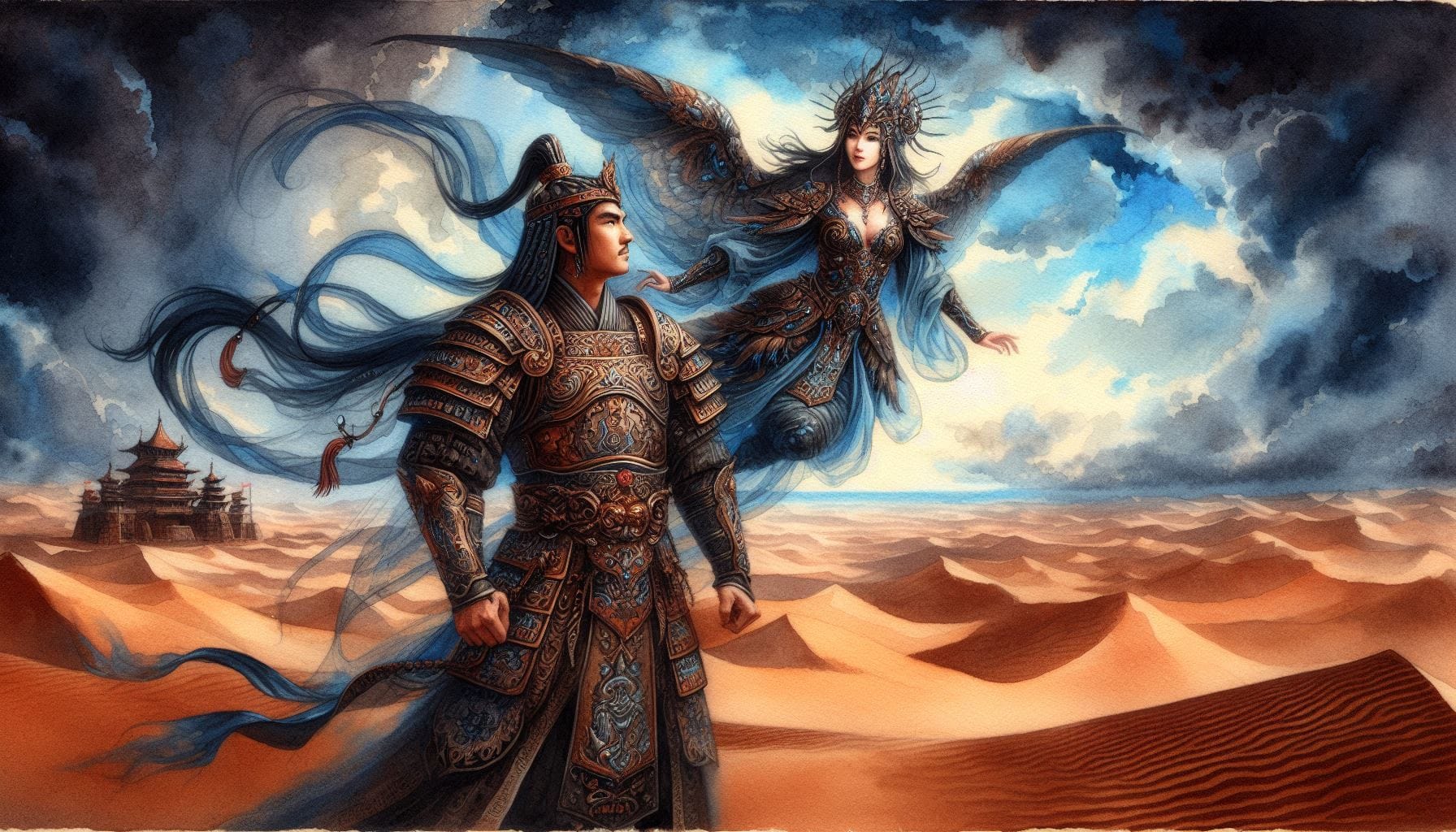
Flying Couch, not Quite a Carpet

Nights 264-281
The story of Ala al’Din may be the most archetypal Arabian Nights story so far. This week, it added some more color: a thief, whose craftsmanship is described in detail (Night 264, p. 866); Yasmin and another woman shouting at each other “whore” and “bitch” (Night 265, p. 868), a reference to the Book of Genesis (the next page), merciless killing of Jews (Night 266, p. 870), a son who doesn’t know he has a great father (Night 268, p. 878), and an absurd ending that wraps up the story in an unlikely way. In the end, Zubaida returns from the dead and helps them get a magical jewel to animate a flying couch and summon a magical warrior to defeat an army (Nights 269-270, pp. 880-883). Altogether, it’s not a great story, but it is delightfully weird.
The second half of this week was a bunch of shorter stories. If they had a theme, it was mercy (the stories of Ma’n (Nights 271-272, Hisham (Night 273), and Ibrahim (Nights 273-276). I thought the stories were weak and especially unmemorable (especially the final story of Ishaq (Nights 279-282). The best from the second half were the story of the “Rum” city of Labtit (Nights 272-273) and Iram, the great empty City of Columns (Nights 276-279). The latter is a story of hubris: a king tries to build paradise on Earth, but God strikes down the king and all his people before they can enter the grand city that they have built (Night 279, pp. 902-903). The framing of the story is the best part: it is described long after it had been built, reminding me of “Ozymandias” and “Look on my works, ye Mighty, and Despair!”
There are new Magic cards this week. Iram should have been a Magic card, but it isn’t. I wanted to make the flying couch count as a flying carpet, but that’s too much of a stretch.