Seriousness replaced absurdity

Nights 649-680
It’s hard for me to say why I found this story so much more tiresome than what came before it. Maybe I’m getting tired of the Nights. Maybe work is particularly stressful right now. If I were to look for an objective reason, I’d say that this story feels like a bad imitation of many of the Nights that came before. It seems like it was written much later; e.g., the presence of muskets (p. 732, Night 664) suggests a later addition. I also thought the action moved too fast, like the author tried to fit too much of an outline into a few pages. The language used to move the storyline along also feels awkward; one of the summaries of rapidly moving events uses the phrase, “Things went from bad to worse; seriousness replaced absurdity.” (p. 718, Night 656)
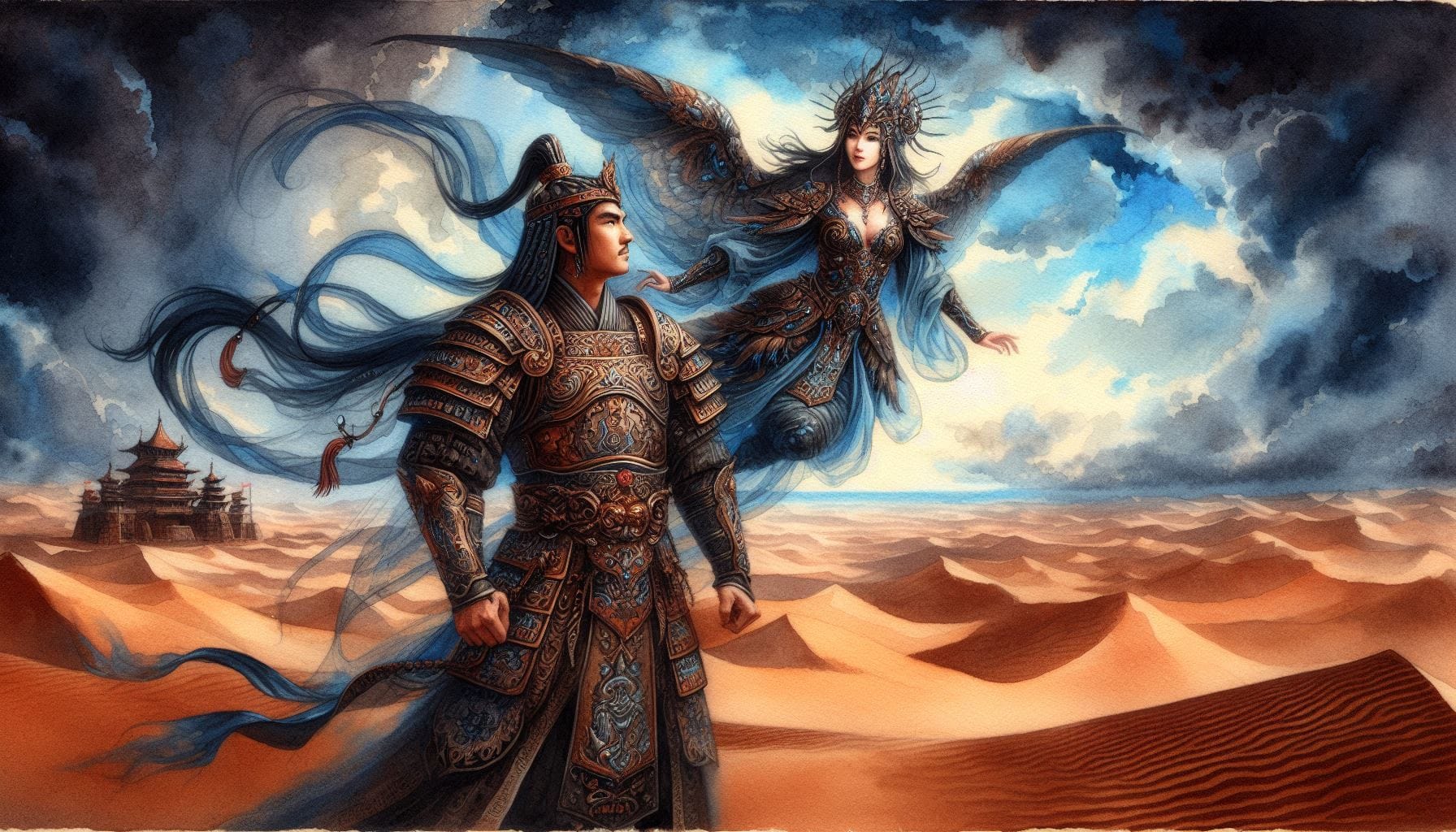
It has its moments. The jinn are fun. Our hero meets many of them, both allies and enemies. They are only roughly sketched, but their names and locations suggest something more: “Carnelian City and the Golden Palace” (p. 720, Night 657) and the “Valley of Fire” (p. 749, Night 675). One of the jinn has four heads: “a lion, another of an elephant, the third of a panther and the fourth of a lynx” (p. 708, Night 708). Another foe is the five-hundred-year-old idolatrous queen that turns the hero into a monkey (p. 751, Night 676). We also see one of the best weapons in the story, the sword of Noah’s son Japheth, al-Mahiq (p. 713, Night 653). But I’d say my favorite image is an army from India where soldiers ride elephants (fair enough) but also giraffes! (p. 732, Night 664).
Despite the images I’ve summarized above, the story is too weak to keep them together. Some of its images are even reused; two distinct villains are both “crucified” and “shot full of arrows” so many times that they each look “like a hedgehog” (p. 706, p. 735; Nights 650 and 666). The story also reached a natural conclusion on page 735, but it kept going for another twenty-two pages. Glad to have this one behind me.